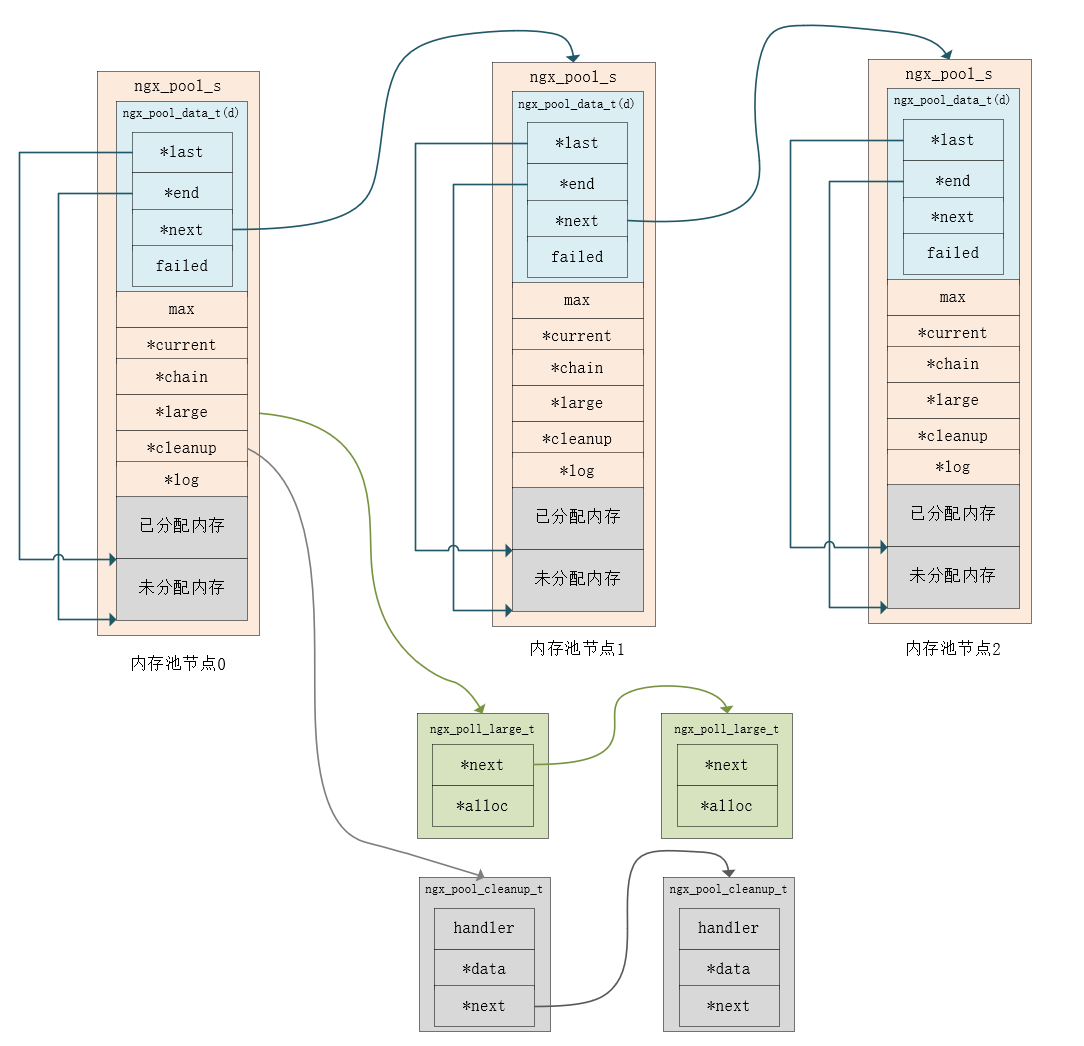
1
2
3
4
5
6
7
8
9
10
11
12
13
14
15
16
17
18
19
20
21
22
23
24
25
26
27
28
29
30
31
32
33
34
35
36
37
38
39
40
41
42
43
44
45
46
47
48
49
50
51
52
53
54
55
| void
ngx_destroy_pool(ngx_pool_t *pool)
{
ngx_pool_t *p, *n;
ngx_pool_large_t *l;
ngx_pool_cleanup_t *c;
// 处理cleanup链上的数据,通过handler进行处理释放
for (c = pool->cleanup; c; c = c->next) {
if (c->handler) {
ngx_log_debug1(NGX_LOG_DEBUG_ALLOC, pool->log, 0,
"run cleanup: %p", c);
c->handler(c->data);
}
}
#if (NGX_DEBUG)
/*
* we could allocate the pool->log from this pool
* so we cannot use this log while free()ing the pool
*/
// 打印large链上的节点和地址
for (l = pool->large; l; l = l->next) {
ngx_log_debug1(NGX_LOG_DEBUG_ALLOC, pool->log, 0, "free: %p", l->alloc);
}
// 打印内存池节点的地址和内存大小
for (p = pool, n = pool->d.next; /* void */; p = n, n = n->d.next) {
ngx_log_debug2(NGX_LOG_DEBUG_ALLOC, pool->log, 0,
"free: %p, unused: %uz", p, p->d.end - p->d.last);
if (n == NULL) {
break;
}
}
#endif
// 释放large链上的大内存
for (l = pool->large; l; l = l->next) {
if (l->alloc) {
ngx_free(l->alloc);
}
}
// 释放pool链
for (p = pool, n = pool->d.next; /* void */; p = n, n = n->d.next) {
ngx_free(p);
if (n == NULL) {
break;
}
}
}
|